
Last updated October 15, 2026
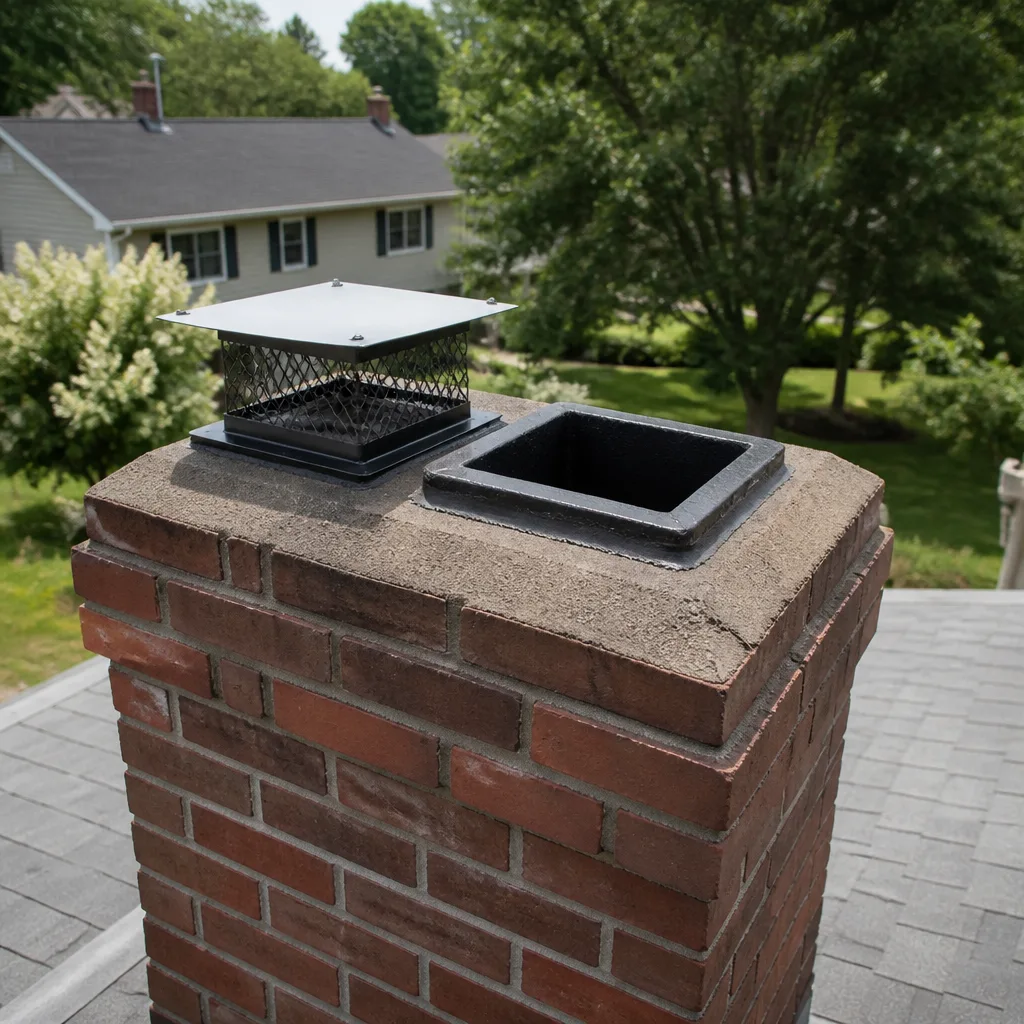 Sweep & inspection
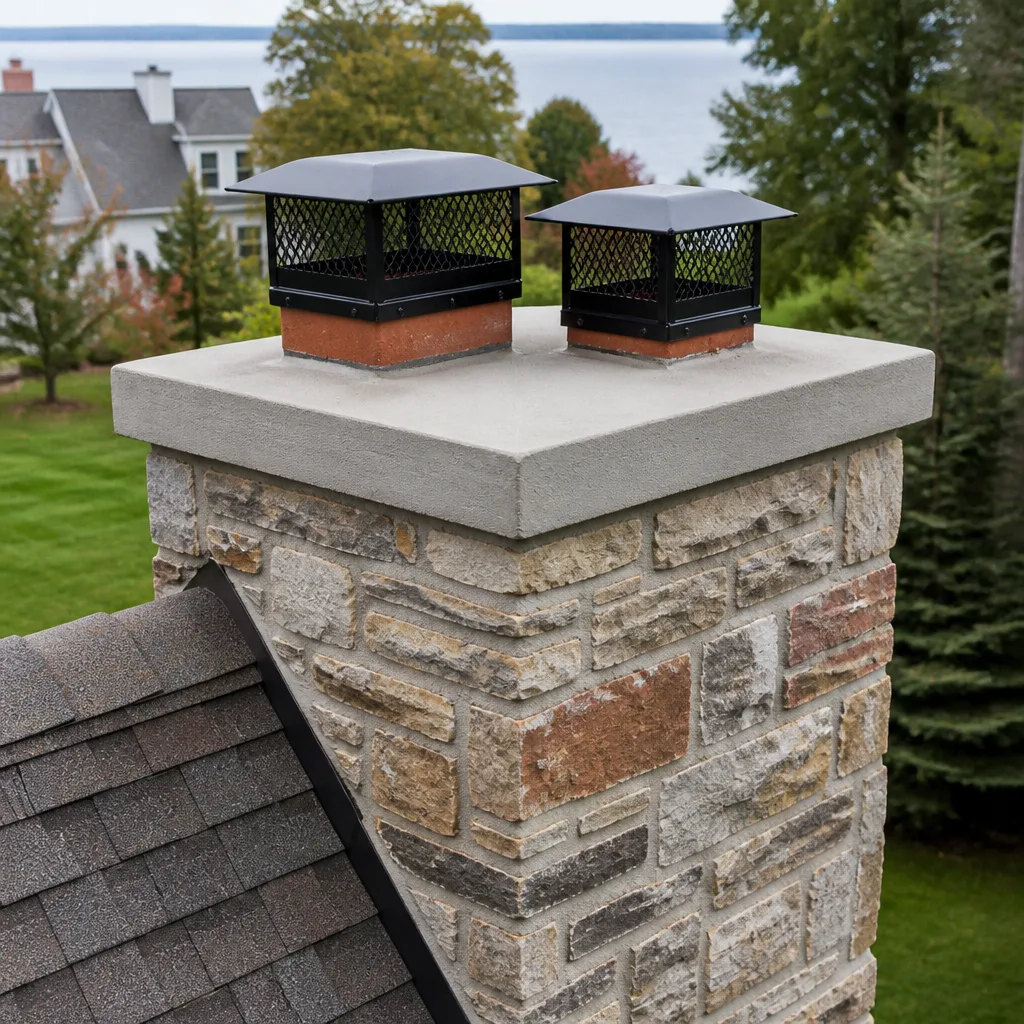 Caps & crowns
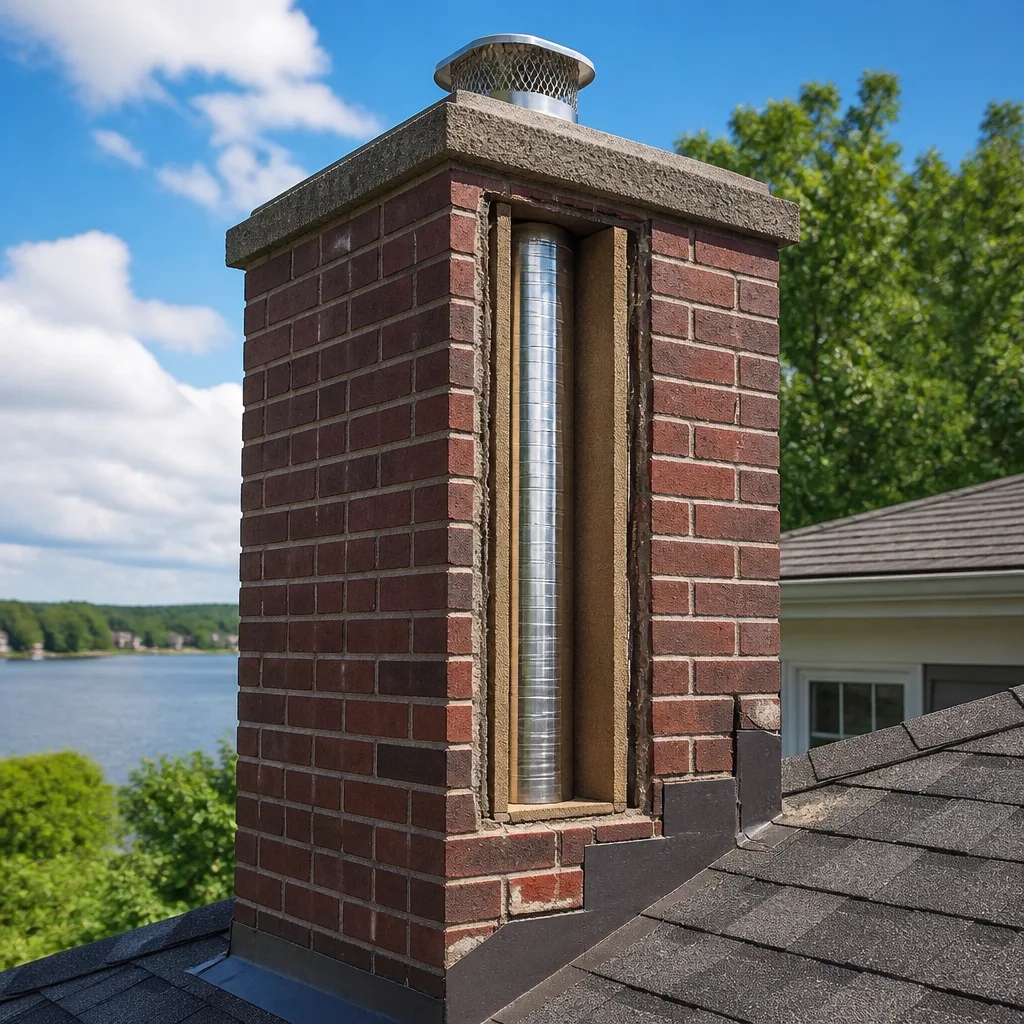 Flue relining
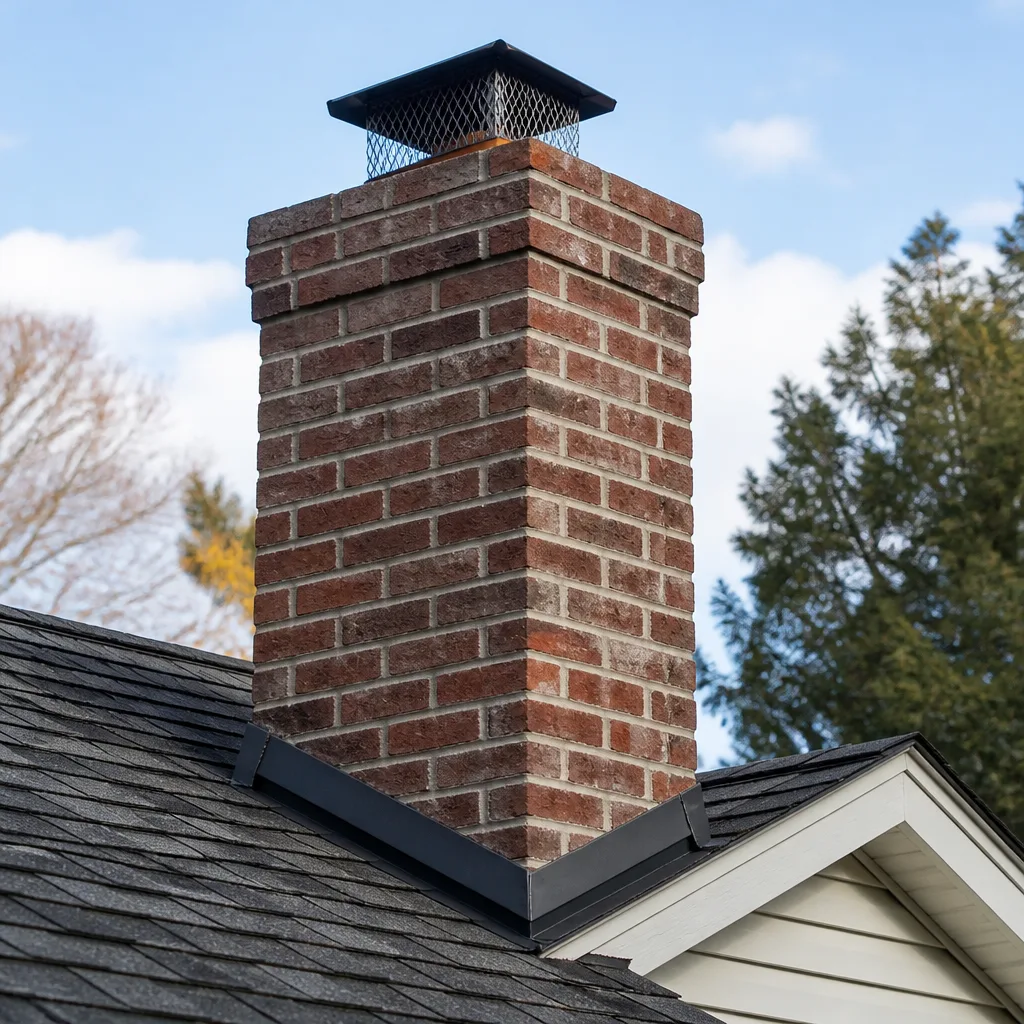 Masonry repair
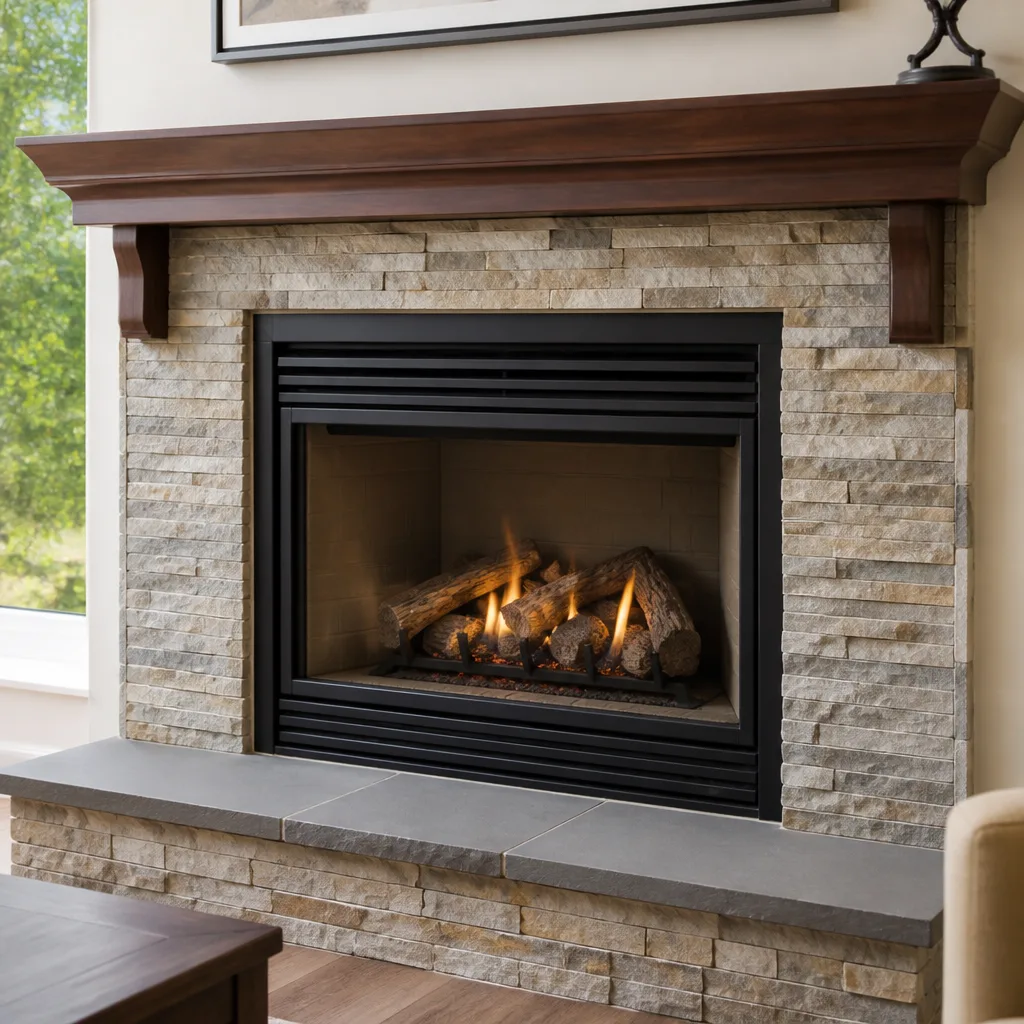 Gas fireplace service
Level 1 sweep and inspection to the NFPA 211 annual standard - flue, crown, cap, and flashing checked and photographed
Chimney sweep logs do not sweep chimneys. They loosen some creosote - which then falls where a brush and vacuum still have to collect it.
Chimney Cleaning Warning Signs: A San Antonio Homeowner’s Reference Guide
Chimney fires in the United States cause roughly $125 million in property damage every year, and nearly all of them share the same root cause: a homeowner who didn’t know what a dangerous chimney looks like. The warning signs are rarely hidden. They’re written in the color of the soot, the staining on the brick, and the smell that lingers after a rainy night. This guide names each sign in plain English, explains what it means, and tells you whether to act today or next season, while our Complete Guide to Chimney Cleaning in San Antonio covers how to keep your system clean year-round. If you own a home in San Antonio, these are the signals your chimney is already sending you.
Quick Answer
Chimney cleaning warning signs include white staining (efflorescence) on exterior brick, a campfire-like smell after rain, visible black or shiny creosote inside the flue, smoke spilling into the room during fires, and crumbling mortar joints. In San Antonio, spalling brick from rare freeze-thaw cycles and stucco chase deterioration from summer heat are additional local warnings. Any one of these signs means the chimney needs inspection; several together often mean it needs immediate attention.
Styles & brands we work with
Table of Contents
- 1. White Staining on Exterior Brick (Efflorescence)
- 2. The Campfire Smell That Won’t Go Away
- 3. Creosote Buildup: Stage One Through Stage Three
- 4. Smoke Spilling Into the Room
- 5. Spalling Brick and the San Antonio Freeze-Thaw Cycle
- 6. Stucco Chase Deterioration in South Texas Heat
- 7. Crumbling Mortar Joints and What They Predict
- 8. Signs of Animal Entry
- Which Signs Are Emergencies vs. Which Can Wait
- How to Document Warning Signs for a Remote Estimate
1. White Staining on Exterior Brick (Efflorescence)
A white, chalky stain running down the face of your chimney isn’t paint overspray or normal weathering. It’s called efflorescence, and it’s a direct signal that water is moving through your masonry. Here’s how it works: rain or humidity seeps into the brick, dissolves natural salts inside the masonry, and then carries those salts to the surface as the water evaporates. What’s left behind is that white residue.
The stain itself is cosmetic. The water movement behind it is not. Over time, trapped moisture inside a San Antonio chimney weakens the mortar, rusts the internal components, and in the rare hard freezes we get, expands and cracks the brick from the inside. Efflorescence is one of the cheapest problems to fix and one of the most expensive to ignore. A proper chimney sweep in San Antonio can often identify the source of water entry in a single visit, whether it’s a cracked crown, failed flashing, or porous brick that needs sealing.
In our experience, homeowners in older neighborhoods like Monte Vista and Government Hill see more efflorescence than newer construction, simply because the original crown and flashing materials have exceeded their service life. If you see white staining, take photos and schedule an inspection. Water is patient, and it will continue to work its way through your chimney until someone stops it.
2. The Campfire Smell That Won’t Go Away
Here’s a test: walk past your fireplace in the middle of a humid San Antonio afternoon and take a breath. If you smell smoke, even though no fire has burned in days, that’s a warning sign. A properly functioning chimney vents everything upward and out. When you smell campfire indoors, it means the draft is reversing or the flue is coated with enough creosote to hold odor like a sponge.
Humidity makes the smell worse, which is why San Antonio homeowners notice it most in spring and early summer, when moisture hangs in the air and the chimney’s interior absorbs it. That moisture activates the creosote deposits, releasing the smoky smell back into your living room. It’s not just unpleasant. It’s evidence that the flue needs attention.
Sometimes the problem is a cold chimney, which happens when the flue is too large for the fireplace or when the home is tightly sealed and struggling to supply replacement air. Other times it’s a mechanical issue, such as a damper that no longer seals. In either case, the smell is your cue to schedule a chimney inspection in San Antonio before burning season begins. A technician can identify whether the issue is creosote, draft, or damper, and give you a written price to fix it before any work starts.
3. Creosote Buildup: Stage One Through Stage Three
Creosote is the tar-like combustible substance that forms when wood smoke condenses on the inside of your chimney. It’s the number one cause of chimney fires, and it doesn’t fail quietly. There are three distinct stages, and you can often identify which one you’re dealing with before a professional ever arrives.
Stage one creosote looks like dry, flaky soot. It’s brown or grayish-black, has a dusty texture, and brushes off fairly easily with a standard chimney sweep. This is what every homeowner will have after a season of regular wood burning. It’s normal, it’s brushable, and it’s exactly what a routine cleaning removes.
Stage two creosote looks like dark, crunchy granules or honeycomb-shaped flakes. At this stage, the creosote has hardened enough that a standard brush alone won’t fully clear it. It often requires rotary cleaning tools to break the deposits loose. You’ll see stage two most often in chimneys that burn unseasoned wood or that don’t get hot enough during usual fires.
Stage three creosote is the one we worry about. It appears as a shiny, tar-like glaze coating the flue walls, often pooled at the bend points or near the damper. It smells strongly, almost like asphalt, and it resists mechanical brushing entirely. This is concentrated fuel. In our experience, stage-three creosote requires chemical treatment, often a product like the professional creosote removers that break down the glaze so it can be safely removed. It’s also a sign the chimney has likely already experienced at least one low-intensity fire the homeowner never noticed.
Here’s a simple way to think about it: if you can see shiny, wet-looking deposits when you shine a flashlight up past the damper, stop using the fireplace and call for service. If what you see is dry and dusty, a standard sweep will handle it. Either way, you’ll want a written price before any work begins, and any repair should come with a written guarantee.
4. Smoke Spilling Into the Room
Smoke should go up. If it comes back into your living room, something is wrong with the physics of your chimney. The most common cause is a draft reversal caused by pressure differences between the inside of your house and the outside air. In San Antonio, where homes are sealed tight for air conditioning efficiency, this pressure imbalance shows up more often than homeowners expect.
The signs are hard to miss: visible smoke drifting into the room when you light a fire, smoke that wafts out when the fireplace is cold, or soot staining on the mantle and the ceiling above the firebox. Each of these tells you the chimney isn’t pulling air upward the way it was designed to.
Sometimes the fix is simple, like opening a window slightly during a fire or cleaning a damper that’s stuck partly closed. But draft problems can also point to something structural, like a flue that’s too short for the roofline, a chimney that’s been resized by soot accumulation, or even negative air pressure from an oversized kitchen exhaust fan. A gas fireplace repair technician familiar with draft mechanics can often diagnose the issue in a single visit, and gas fireplaces have their own draft and venting considerations that wood-burning fireplaces don’t share.
If smoke spills into the room on a regular basis, stop using the fireplace. Smoke inside the house means carbon monoxide can accumulate inside the house too. That’s not a maintenance issue. That’s a health issue. Schedule an inspection promptly.
5. Spalling Brick and the San Antonio Freeze-Thaw Cycle
San Antonio doesn’t freeze often, which is exactly why our freeze-thaw damage is so sneaky. Here in South Texas, most chimneys are built for heat, not for cold. When we get one of those rare hard freezes, like the ones that hit in February 2021 and again in recent winters, moisture that’s been sitting inside the brick expands as it turns to ice. That expansion pushes the brick face outward, and when it thaws, the face flakes off. That’s spalling.
Spalling looks like brick that’s shedding. You’ll see rough patches where the smooth exterior face has broken away, fragments of brick on the ground around the chimney base, and brick faces that crumble slightly when you touch them. It’s not just an aesthetic issue. Each spalled brick exposes the softer interior material to more water, which accelerates the damage. What starts as one or two bad bricks becomes a structural problem within a few years if left alone.
The fix depends on how much brick is affected. Isolated spalling can be repaired by replacing individual bricks. Widespread spalling often means the chimney crown has failed and water has been soaking the entire structure for years. In that case, the repair work may involve rebuilding a portion of the chimney, and that’s when you’ll want a written price and a guarantee before any work begins. We don’t recommend homeowners attempt brick replacement themselves. The mortar mix and the installation technique matter more than most people realize, and a failed patch job makes the original problem worse. If you’re unsure, call our Alcott Chimney San Antonio home team and we’ll take a look.
6. Stucco Chase Deterioration in South Texas Heat
Many San Antonio homes, especially those built in the 1990s and 2000s, have what’s called a chase: a framed or stucco-covered chimney enclosure that houses the metal flue pipe rather than a full masonry chimney. Stucco chases are common in South Texas because they’re cheaper to build and plenty functional, but San Antonio’s heat does specific damage to them.
The problem is thermal expansion. Stucco expands and contracts at a different rate than the metal flue inside, and over years of hundred-degree summers, that differential movement causes hairline cracks. Rain gets in, sits against the framing, and you get rot, mold, or both. Because the damage happens slowly and starts behind the surface, many homeowners don’t notice until the stucco has already separated from the underlying wood or until they see stains running down the siding.
Warning signs on a stucco chase include: cracks running vertically along the corners, hairline lines that widen after a hot summer, stucco bulging away from the frame, and dark streaks that appear after rain. If you see these, don’t wait. The repair cost grows fast once the framing starts to rot. We’ve seen cases where a chase needed complete rebuilding because a few small cracks were ignored for two or three seasons. Early attention from a chimney sweep in San Antonio keeps a $400 patch job from becoming a $4,000 rebuild.
7. Crumbling Mortar Joints and What They Predict
Run your finger along the mortar between the bricks of your chimney. If it flakes away like sand, you’re looking at a process called repointing, and the chimney is telling you that its mortar has lost its bond. Mortar is the flexible joint material that holds the bricks together. Over decades, San Antonio’s alternating heat and rain wear the mortar down until it no longer grips the brick.
Crumbling mortar joints are one of the most overlooked warning signs in chimney care, mostly because they look normal to an untrained eye. A bit of sand in the driveway, some rough lines on the chimney face, it’s easy to dismiss. But mortar erosion opens gaps for water, which leads to spalling, which leads to structural shift. It’s a cascading failure, and the cheapest point to stop it is at the mortar stage.
The repair is called repointing, and it involves grinding out the old mortar to a consistent depth and packing in fresh mortar that matches the original in strength and color. It’s skilled work, and a bad repointing job can do more harm than good. The new mortar must be properly matched to the brick’s hardness, otherwise it will either crack the brick or fall out within a few years. When done correctly, repointing extends the life of a chimney by decades. When done by a professional, it should come with a written guarantee.
8. Signs of Animal Entry
Chimneys without caps are open doors for wildlife. In San Antonio, the usual culprits are squirrels, raccoons, and, most commonly, chimney swifts, the small birds that nest in chimneys each spring and summer. The signs of animal entry aren’t subtle once you know what to look for.
Listen for scratching or chirping sounds inside the chimney, especially in the early morning or evening. Look for droppings on the smoke shelf or visible nesting debris at the top of the flue if you can safely see it from the ground. Smell is another signal: animal waste and nesting material produce a distinct musty or ammonia-like odor that doesn’t resemble creosote smoke. And if you see flies or insects gathering around your fireplace, that’s often a sign something has died inside the chimney.
Animals bring a few problems at once. Their nests block the flue and create a fire hazard. Their droppings carry pathogens. And their presence means the chimney cap is either missing or damaged. Removal should always be followed by a proper chimney cleaning and the installation or repair of a cap, and that work should be done by someone who knows how to do it safely. We remove the animals, clean the flue, and install the cap so it doesn’t happen again.
Which Signs Are Emergencies vs. Which Can Wait
Not every chimney warning sign requires you to stop using the fireplace immediately. Some are urgent. Others can wait for a scheduled appointment. Here’s how to tell the difference in plain terms.
Stop using the fireplace now if:
- You see smoke spilling into the room during fires. This means carbon monoxide could be entering your home.
- You see shiny, glazed creosote inside the flue. This is stage-three creosote and it’s the fuel for chimney fires.
- You hear active animal movement or smell decomposition. A blocked flue is a fire and health risk.
- You see recent cracks, spalling brick, or mortar that crumbles when touched, especially after a hard freeze. This indicates water damage is actively advancing.
Can wait for a scheduled appointment:
- Light, dusty soot buildup. This is normal and resolved with a routine sweep.
- Faint smell of smoke that only appears on humid days. It indicates creosote presence but not an immediate hazard if the fireplace isn’t being used.
- Minor efflorescence that appears without accompanying cracks. This should be inspected but doesn’t usually mean the fireplace is unsafe today.
- Small stucco hairline cracks that haven’t widened. These should be sealed before the next rain season but aren’t an overnight failure.
If you’re not sure which category your chimney falls into, err toward caution. Have it inspected. The cost of an inspection is modest, and the alternative is a repair bill that could have been much smaller.
How to Document Warning Signs for a Remote Estimate
A good chimney company can often give you a preliminary, ballpark range from photographs before you commit to an appointment. Here’s how to document warning signs properly so the estimate is accurate.
- Take photos in good light. Morning light works best for exterior shots. For interior shots near the damper, use a flashlight angled up into the flue, not straight at the damper.
- Capture the whole chimney, then the specific area. First photo: the full chimney from the ground, showing its position on the house. Second photo: the warning sign itself, like the white stain or the crumbling mortar. Third photo: a closeup that shows texture.
- Photograph the flue from inside. Open the damper as far as it goes, shine the flashlight up, and take a photo with your phone’s flash on. Don’t stick your head into the firebox. Just the phone.
- Document the smell. Write down when you notice it, how strong it is, and whether it gets worse after rain. This helps us determine whether creosote is the issue or whether it’s a draft or damper problem.
- Measure if you can. If you can safely access the ground area around the chimney, measure the chimney’s width and depth at its base. Not critical, but helpful for rough repair estimates.
- Send it all in one batch. Attach the photos and a short description to an email or text before your call. The more we can see, the more accurate the initial range will be.
This process works best when paired with a phone call to talk through what you’re seeing. Live questions get better answers than email threads, and you’ll speak with a real person, not a voicemail queue.
Common Mistakes to Avoid
- Waiting until you see visible damage from the ground. Most chimney problems start inside the flue where you can’t see them from the yard. An annual inspection catches what the eye misses.
- Ignoring the smell. A smoky odor on humid days isn’t normal fireplace character. It’s evidence of creosote buildup or a drafting failure.
- Painting over efflorescence. Covering the stain doesn’t stop the water moving through the brick. It just hides the signal until the damage is worse.
- Burning unseasoned wood to save money. Green wood produces more creosote per burn and costs more in cleaning and repair over time than seasoned wood ever saves.
- Skipping the chimney cap. A cap costs little and prevents animals and rain from entering. The repair costs for animal damage or water penetration dwarf the price of a cap.
- Hiring the cheapest sweep without checking what’s included. Some low-ball prices don’t include a full inspection, written price, or guarantee. Ask what the sweep includes before you book.
See the difference
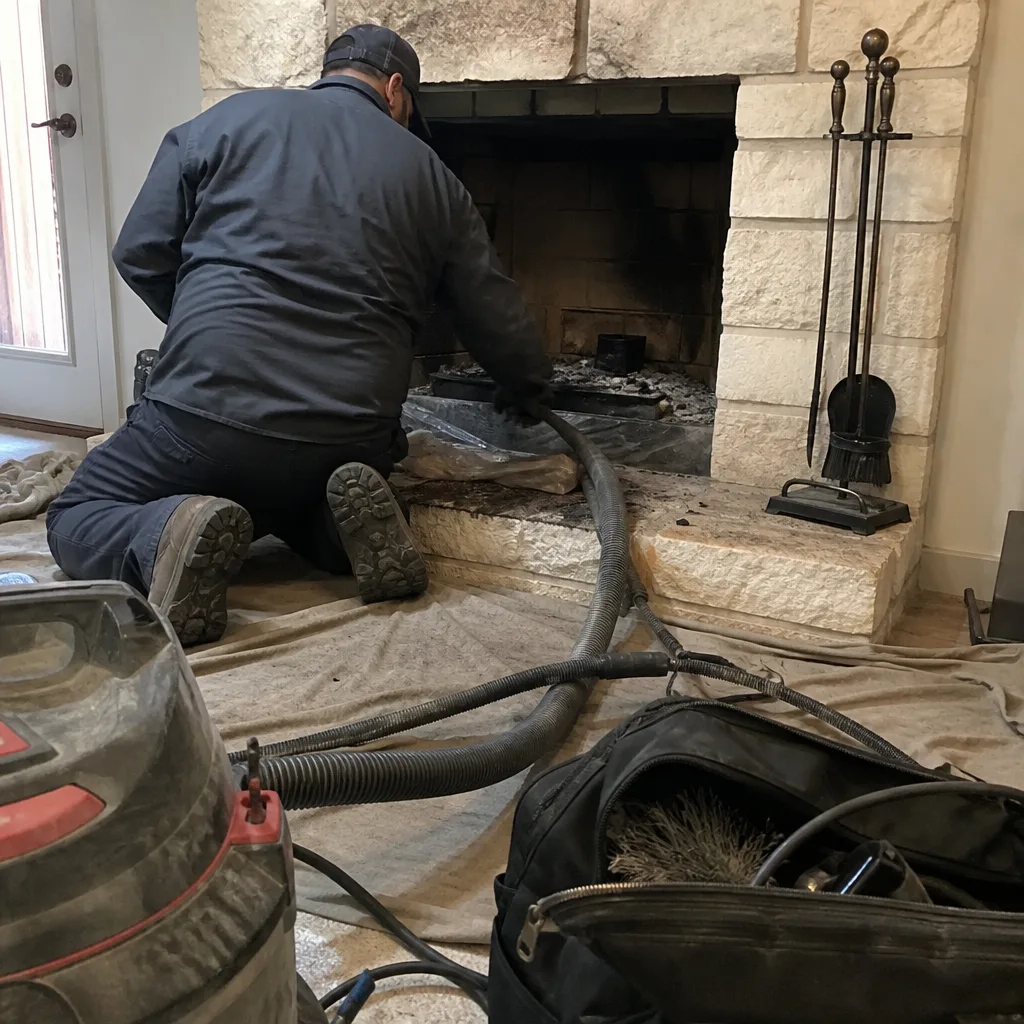 Before
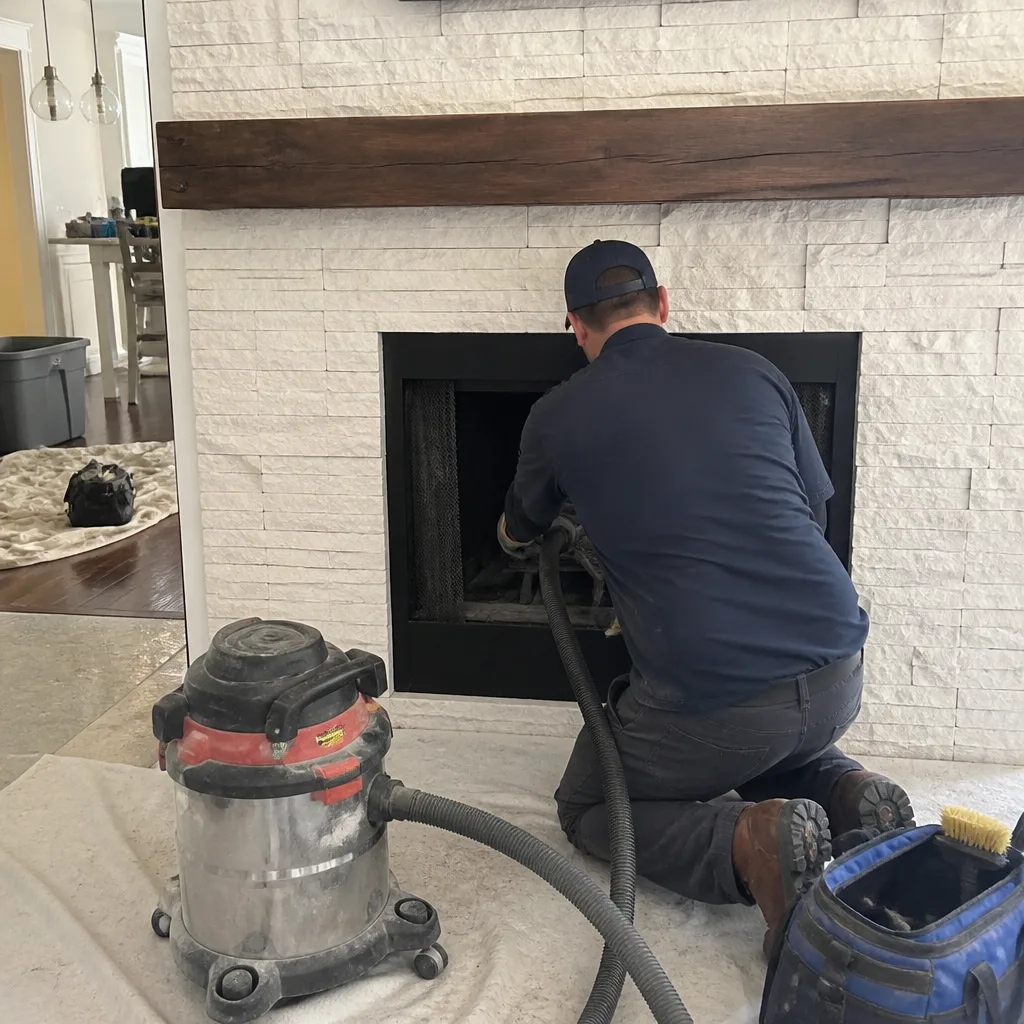 After
After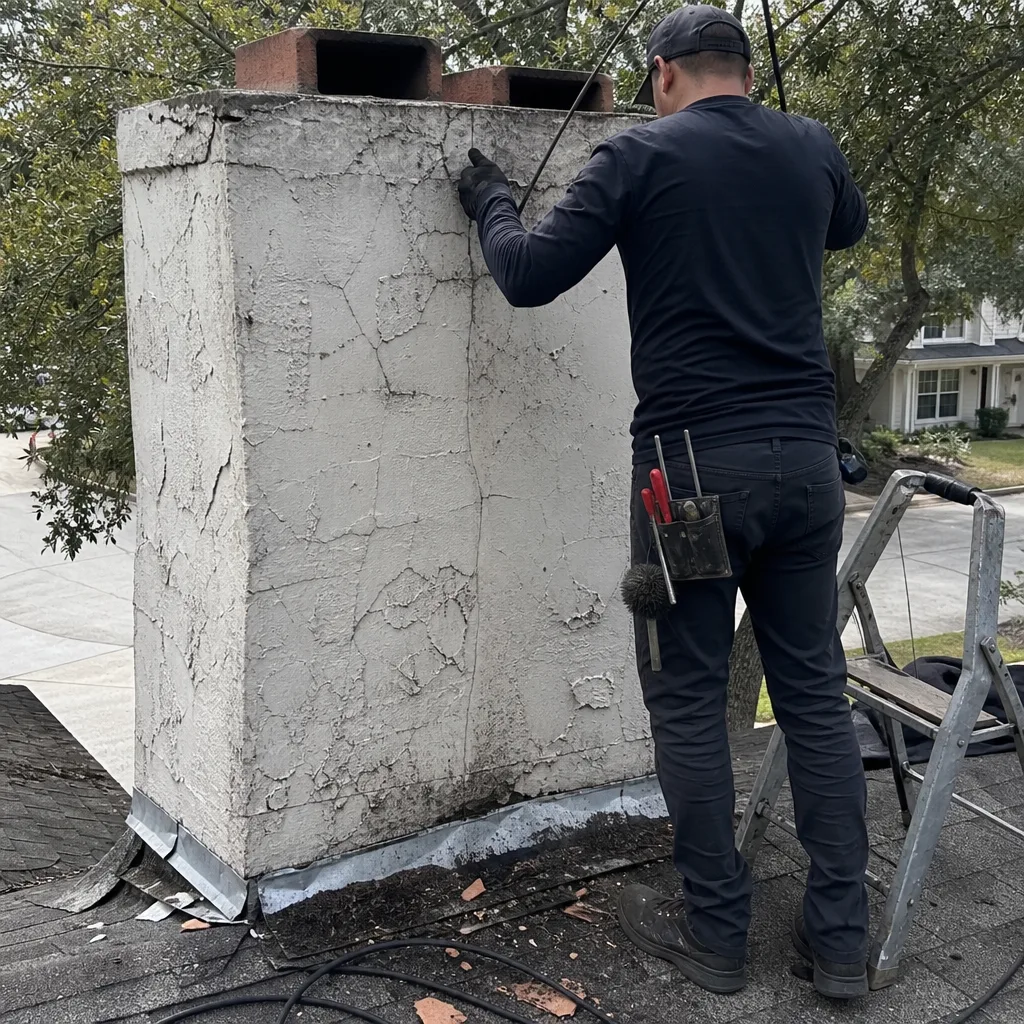 Before
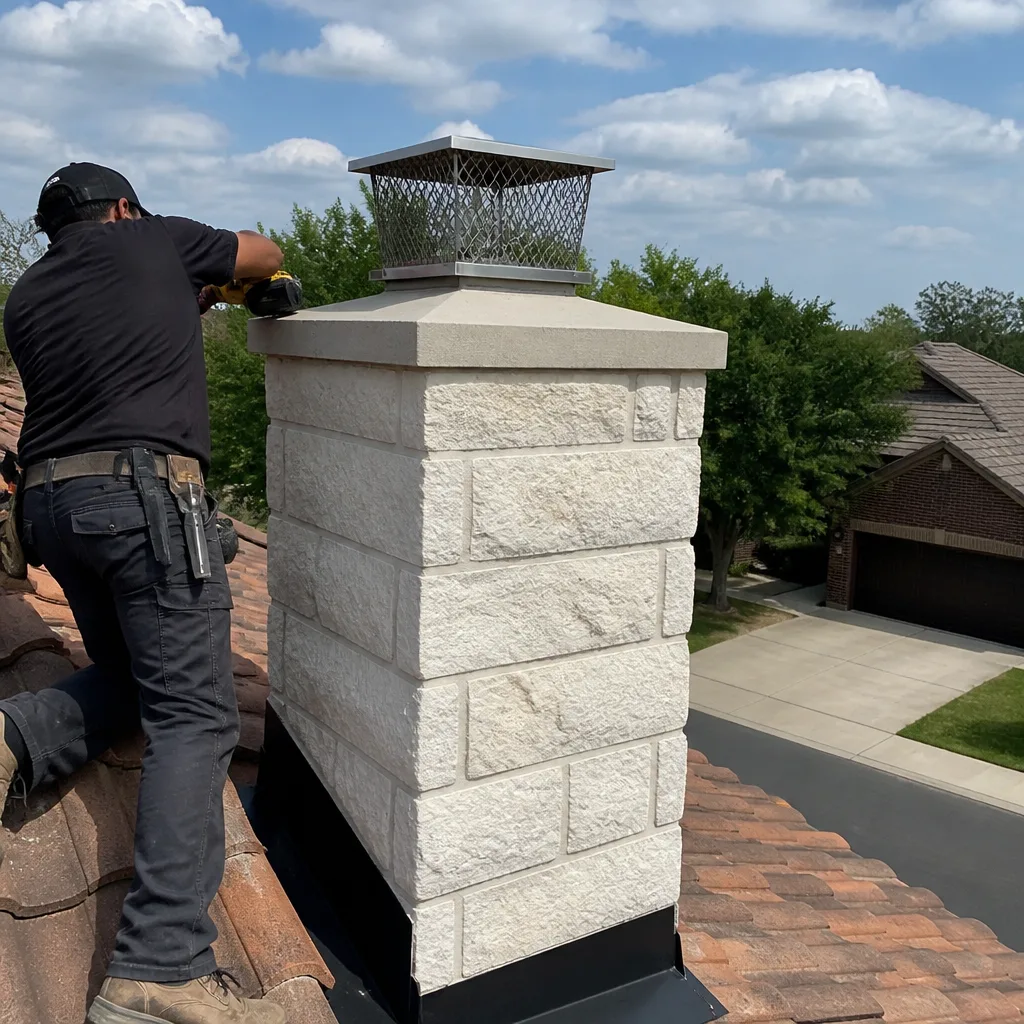 After
After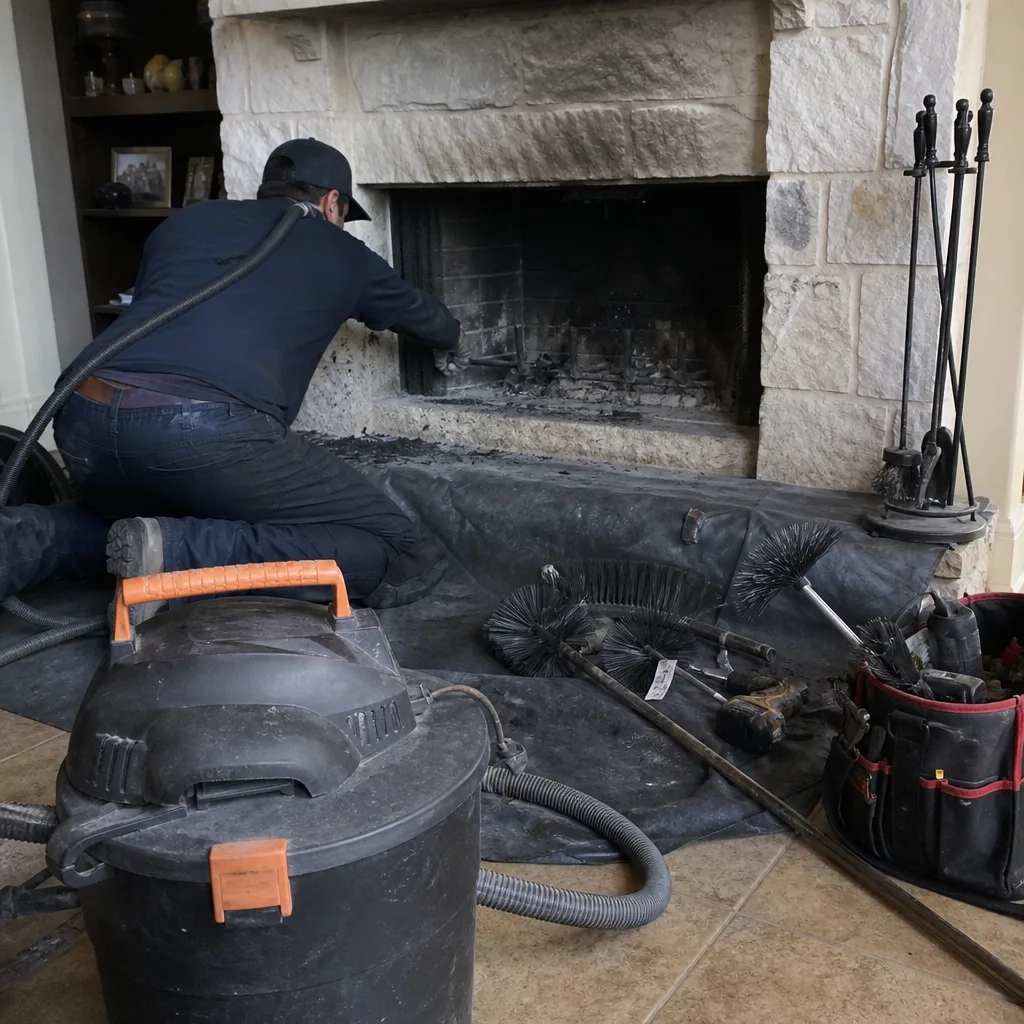 Before
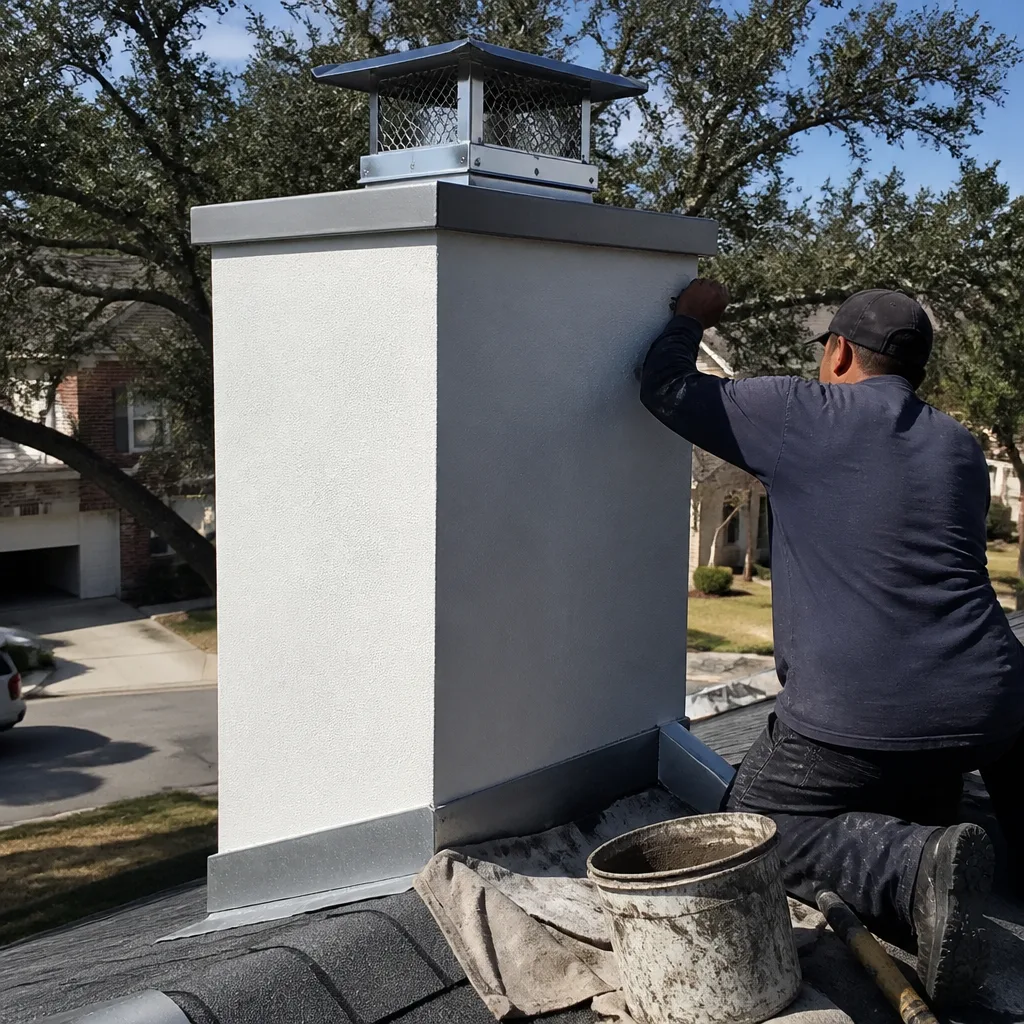 After
AfterWhen to Call a Professional
Call a professional if you’ve identified any of the warning signs in this guide and you’re not certain how serious the condition is. Call if you see shiny creosote, if smoke spills into your living room, if you can hear animals inside the chimney, or if you haven’t had the chimney inspected in more than a year. You don’t need to diagnose the problem yourself. You just need to know enough to know when to call. Alcott Chimney San Antonio offers free estimates in San Antonio, and we’ll give you a written price before any work begins. Call (903) 515-5079 and talk to a real person who can walk you through what you’re seeing.
Frequently Asked Questions
A standard chimney sweep in San Antonio typically runs between $149 and $279, depending on the chimney’s condition and whether there’s significant creosote buildup or animal debris to remove. The price should be quoted upfront and written, not estimated after the fact. Any reputable company will tell you the cost before they start and won’t surprise you with add-ons at the end. Call (903) 515-5079 for an exact quote, estimates are free.
You’ll see dark, flaky, or shiny deposits when you shine a flashlight up past the damper, and you may notice a persistent smoky smell in the room on humid days. Flaky, dusty deposits are stage-one creosote, which a standard sweep removes. Shiny, glazed deposits are stage-three creosote, which requires chemical treatment and should be addressed before you light another fire. If you’re unsure which stage you’re looking at, an inspection will tell you definitively.
Efflorescence is a white, chalky stain caused by water moving through masonry and leaving mineral salts behind as it evaporates. The stain itself is not dangerous, but the water movement behind it is, because prolonged moisture leads to spalling brick, rusted internal components, and structural wear. In San Antonio, where hard freezes are rare but intense, trapped water that freezes can crack your chimney from the inside. Schedule an inspection rather than ignoring or painting over the stain.
We don’t recommend it. Chimney sweeping requires tools most homeowners don’t have, working at heights, and access to the flue from both the top and the firebox. Getting onto a roof in San Antonio’s heat or after a rain is dangerous without proper equipment, and a fall is not worth saving a couple hundred dollars. A professional sweep also includes an inspection, which catch problems early that a DIY cleaning misses entirely.
The National Fire Protection Association standard says chimneys should be inspected at least once a year, and swept as needed based on what the inspection finds. In San Antonio, where many chimneys go unused through the hot months and then see heavy use in the cooler season, an annual inspection before your first fire is the right schedule. If you burn wood frequently, you’ll likely need a sweep every year. If you only burn occasionally, the inspection will tell you whether a full sweep is necessary.
Late summer or early fall is ideal, before you’re eager to light the first fire and before the holiday season fills up everyone’s calendar. San Antonio’s autumn weather makes it comfortable for roof work, and you’ll have your chimney ready to go when the first cold front arrives. If you wait until December, you’re competing with everyone else who realized they haven’t used their fireplace since February. Schedule early and you’ll have one less thing to think about when the temperature drops.
The Bottom Line
Your chimney is sending you signals, and most of them are simple to read once you know the language. White staining means water. A smoky smell on a humid day means creosote. Shiny deposits mean stop using the fireplace now. Crumbling mortar and spalling brick mean the damage is progressing and the repair window is narrowing. None of these signs resolve on their own, and all of them are cheaper to address now than in a year. San Antonio’s specific climate creates specific failure patterns, and a homeowner who knows those patterns catches problems early. If you’ve seen any of the warning signs in this guide, get an inspection and get a written price before you commit. For more guides & resources on keeping your chimney safe, explore our blog. The alternative is a chimney fire, a structural rebuild, or a season without a fireplace, and none of those are necessary when the warning was there all along.
Written by Ruben Castellano, Owner at Alcott Chimney San Antonio, serving San Antonio since 2002.